
There is a particular feeling that comes with sensing there is more to you than the world has given you the opportunity to discover. It is difficult to explain because, for a long time, you may not even know what that something is. You only know that the life in front of you feels smaller than the possibilities you sense within yourself, and that somewhere between what you could become and what you have been able to do, something is missing.
I have spent much of my life trying to understand that feeling, first in myself, and eventually in the world around me. I did not have the language for it when I was younger. I did not know that one day it would become the foundation of an institution. I only knew that there were things I wanted to explore, things I wanted to create, and parts of myself I had not yet found a way to express.
In Grade Eight, I said I wanted to become an architect. I did not know what kind of architect I meant, and I certainly could not have explained the work I do today. I imagined architecture in the ordinary sense of designing buildings, but perhaps the desire was always pointing toward something broader: the possibility of looking at scattered pieces, understanding how they relate, and creating something that allows them to work together.
School did not always give me the opportunity to explore everything I cared about. There were things I wanted to try, including arts and crafts, that I could not pursue in the way I hoped. I do not remember that experience simply as being denied particular activities. What stayed with me was the sense that there were parts of me waiting to be discovered, but I could not always find the conditions that would allow me to discover them. I knew there was more to explore, yet wanting to explore something and having a real opportunity to do so were two different things.
For a long time, I did not know what to make of that difference.
The first time I gave the world a piece of myself
During the COVID-19 period, when I was in Form Two, I began exploring something I had been drawn to since childhood: media and content creation. I had always enjoyed imitating news anchors and reading the news, imagining myself on screen, and later became fascinated by YouTubers who seemed able to take their curiosity about the world and turn it into something other people could experience with them. Their videos were entertaining, but what interested me was the freedom to explore an idea, follow a question, tell a story, and invite someone else into the experience.
My first YouTube video was not a polished production or an ambitious creative project. It was a sit-down video about my own life, filmed on my dad’s old Samsung phone and edited using an application that left a watermark on the finished video. I shared it in my dad’s groups. The production was simple, but the decision to make it was not.
I spoke about growing up as a preacher’s kid, moving around frequently, experiencing loneliness, and going through medical procedures. I shared parts of my life that were personal, and I remember feeling that I had basically given half of my heart in that video. It was one of my first experiences of taking something that existed within me and finding a way to make it visible to somebody else.
That mattered to me.
When school resumed and life returned to its familiar routines, my content creation slowed down. The space I had found to create became harder to maintain. But when I completed high school at sixteen and entered the holidays before campus, one of the first things I did, quietly and almost secretly, was start posting again.
In May, I joined campus to study computer science, the course that felt most available within the wide range of things I wanted to explore. The daily journey to and from campus took around four hours in total, and my life became a mixture of studying, travelling, thinking, and trying to find room for the other things that interested me. Technology had its own attraction, particularly the way systems could be designed, how things could work together, and how complex problems could be approached with structure. I did not yet know how closely those interests would eventually connect to my work.
I was still finding my way.
Colouring, a brother, and the beginning of something unexpected
Around that period, colouring became something I began taking more seriously. It grew out of a moment that could easily have passed without meaning much: a rant session with my brother, during which I coloured. There was something about the activity that drew me back. Before long, I was carrying colouring sheets and colours around with me, making room for an interest that was becoming increasingly difficult to dismiss as an occasional pastime.
In November 2024, I hosted my first event.
Looking back, what interests me is not simply that I had discovered another thing I enjoyed. It is that an activity I could have kept to myself began finding its way into a shared experience. Something personal was becoming something other people could participate in. Colouring offered a way for people to sit together, make something with their hands, and experience creativity without needing to prove that they were artists first.
I began to see that an interest did not have to remain an interest. With the right conditions, it could become an activity, an experience, a community, or even the beginning of something that could continue beyond the person who first imagined it.
I was learning this before I had the words to explain it.
My interest in media followed a similar path, although it taught me a different lesson. After high school, I wanted to make a more ambitious YouTube video, and eventually I produced one called I Went to Every CJ’s Restaurant in Nairobi in a Day. It was the kind of production I had watched other creators make and wanted to attempt myself. I spent more than KSh 23,000 on it, money I had earned through design gigs, despite not having a direct and consistent source of income.
The video brought me genuine joy. It also led to an unexpected gesture from CJ’s, which rewarded me with an iPhone 15. For a young creator, it was an extraordinary experience: something I had imagined, worked to produce, and put into the world had been noticed and appreciated by the very brand at the centre of the story.
But the most important lesson was not about the money, the equipment, or the recognition. Money was not the problem. What I was missing was a clear understanding of why I was creating these productions and a structure that could help me sustain the work.
I had discovered that I could make something I was proud of. I had not yet worked out what would make the work coherent over time, how each production would contribute to something larger, or what kind of foundation would allow me to keep going. I tried to find ways to continue, but I did not return to consistent video production in the way I had hoped.
That experience left me with a question I would carry for years: what does it take for a person’s potential to become something they can actually build upon?
It is one thing to discover that you can do something. It is another to have the purpose, capabilities, resources, relationships, and systems that allow you to develop it, practise it, sustain it, and make it valuable to others.
I had encountered that difference in my own life, although I did not yet understand how central it would become to the work ahead.
I thought I had too many interests. They were clues.
As the years passed, my interests continued to expand. Media, technology, communities, experiences, craftsmanship, entrepreneurship, governance, cybersecurity, artificial intelligence, leadership, systems, and institutions all occupied space in my mind. I could become deeply interested in one subject and then find myself drawn into another, wondering how the two might relate.
From the outside, it might have looked as though I needed to choose one path and leave the rest behind. I sometimes wondered the same thing. How could all these interests belong to one life? How could someone who loved storytelling also care so deeply about governance, or someone interested in creative experiences become fascinated by institutional structures and the long-term stewardship of technology?
The answer did not arrive as a neat career plan. It emerged as I began building Lela Works and trying to understand what all the different parts were actually for.
I began to recognise that I cared about stories because they allow potential to be expressed. I cared about experiences because they allow people to participate and discover what becomes possible when they encounter something new. I cared about craftsmanship because potential must be developed into something made with skill, care, and excellence. And I cared about systems because valuable work needs structures that allow it to endure, grow, and make further work possible.
The interests were never simply competing for my attention. They were clues pointing toward a common purpose.
In that realisation, the word architect began to mean something different to me. I was not abandoning the boy who wanted to become an architect in Grade Eight. I was beginning to understand him. The work that held my attention was increasingly about designing the conditions within which people, ideas, capabilities, ventures, and institutions could become more than they were before.
I was becoming an institutional architect.
That did not mean I had finished discovering what the work required, nor that I had suddenly acquired all the answers. It meant I had found a way to understand the questions that had followed me for years, and a direction in which I was willing to spend my life working.
The night the pieces connected
On June 26, 2026, at 3:32 a.m., I was in Utawala, Nairobi, sitting in a room I wanted to move out of, wearing shorts and a T-shirt from my ex. The world was quiet, the work waiting for the next day had not disappeared, and nothing about my immediate circumstances had suddenly changed.
I was staring at my screen with my hands over my mouth.
What had begun as a conversation about the structure of Lela Works had moved through media, experiences, craftsmanship, technology, governance, systems, institutions, and human potential. We were no longer looking at a collection of interests or separate ventures. We were seeing how the pieces connected.
Epic Plus was not merely about production. It was about expression and visibility.
Kena was not merely about events. It was about participation and belonging.
Jema was not merely about products. It was about craftsmanship and mastery.
Forge was not merely about technology. It was about stewardship, governance, and the structures that help valuable things endure.
Each network had a distinct role, but together they belonged to a larger idea. The things I wanted to build were connected by the same concern: how human potential could be expressed, developed, realised, and carried forward through work that made a lasting difference.
I had spent years trying to understand how my interests could fit together. That night, for the first time, I could see the architecture beneath them.
The room did not change. My bank account did not change. The responsibilities waiting for me the next day did not change. But I had found language for something that had been taking shape long before I could explain it.
I had not found a finished answer. I had found the question I was willing to spend my life working on.
What conditions would allow human potential to become real?
Perhaps the world has a conditions problem
We speak about potential all the time. We see it in children, in young people, in entrepreneurs, in artists, in communities, and in people who have not yet found their place in the world. We recognise it in a teacher’s belief that a child could become something extraordinary, in a person’s ability to imagine a better life, or in a community’s determination to build a different future.
But recognising potential and enabling it to flourish are not the same thing.
A person can have an idea without having the resources to pursue it. They can have talent without access to the tools, teaching, or opportunities that would help them develop it. They can have the motivation to begin but lack the relationships, capabilities, or systems that would allow them to continue. A promising activity can begin and disappear because the conditions that sustained it were never established. Something valuable can be created by one generation and still fail to make it easier for the next generation to achieve more.
These are not always problems of individual ability or ambition. Sometimes, what is missing is the environment around the person: the conditions that help potential move beyond possibility and into productive activity, and the structures that allow the resulting contribution to endure.
Potential is everywhere.
The conditions are fragmented or missing.
That is the conviction at the heart of Lela Works.
Lela Works is an ecosystem that turns human potential into lasting contribution through productive activity.
Its purpose is to make the conditions, capabilities, resources, relationships, and systems that enable this transformation easier to create, access, develop, and sustain.
Lela Works operates across individuals, ventures, communities, and institutions. It helps existing potential become meaningful activity, turns that activity into lasting contributions, and creates conditions through which those contributions can make further contributions possible.
The underlying cycle is:
The long-term ambitionA world where more potential is realised, more contributions endure, and what one generation creates makes it easier for the next to achieve more.
This is not a claim that Lela Works has already solved the problem. It is the work Lela Works exists to undertake, the architecture we are building, and the standard against which that work must continually be examined.
The ambition is not simply to create more businesses, produce more content, host more experiences, or build more systems for their own sake. Each of these can be valuable, but their deeper value depends on what they make possible for people, what they help people become capable of doing, and what remains after the immediate activity is over.
The question is not only what we can create. It is what our creations will enable others to create.
Building a world with more doors
I have come to understand that my life’s work is to help people see what they can become, develop what they discover, and build things that make lasting contribution possible. I want to understand, design, and build the conditions, capabilities, resources, relationships, and institutions that enable human potential to become productive activity and lasting contribution.
That responsibility is bigger than any one project, company, or career. I would gladly spend my life working toward a world, especially across Africa, where the potential people see in one another has a greater chance of being discovered, developed, realised, and built into something that endures. A world where what one generation creates makes it easier for the next to achieve more.
Creating Lela Works has been the most loving practice I have undertaken in my life. It has required me to look at the things I care about, understand how they fit together, and ask what I am willing to build in service of something larger than myself. It has also required me to accept that a conviction can be clear long before the institution built around it is complete.
There is still much to learn, much to build, and much to prove. Lela Works is a work in progress, and its future will depend not on the beauty of its ideas alone, but on the quality of the conditions it creates, the work it enables, the contributions it sustains, and the people who choose to build alongside it.
I do not believe every person needs to build a company, become a founder, or follow the same path. Potential takes different forms, and contribution can happen through many kinds of work. What matters is whether people have a genuine opportunity to discover what they can do, develop their capabilities, participate meaningfully, and contribute in ways that make a difference beyond themselves.
Perhaps you are someone who has always felt there is more you could become. Perhaps you are a parent, teacher, artist, builder, entrepreneur, community leader, or institution that has seen what people can do when the right conditions exist. Perhaps you have resources, relationships, knowledge, or capabilities that could help someone else take a step they have not been able to take alone.
Whatever your place in this story, I hope you will see that the work of creating conditions is not reserved for one founder or one institution. It belongs to all of us who believe that human potential deserves more than recognition. It deserves the opportunity to become something real.
Lela Works is being built around that belief. We want to work with people and institutions who share the conviction that what we create today should help make more possible tomorrow. The work may begin with a story, a creative experience, a craft, a venture, a capability, a relationship, or a system. What matters is that we build with intention, and that our contributions open possibilities beyond ourselves.
I began with a boy who wanted to become an architect but could not yet name the kind of architecture he wanted to practise. I found my way through stories, technology, colouring, creative work, and the questions that kept connecting them. Eventually, I began to understand that the architecture I was searching for was not only about what we build, but about the conditions that make building possible, and what those conditions allow other people to become.
The strategy came later. The conviction came first.
A World with More Doors.
Potential is everywhere. The conditions are fragmented or missing.
And sometimes, the most important door is the one we build for somebody else.
Which door could you open?
If this conviction speaks to you, I invite you to explore Lela Works, follow the work as it develops, and consider what we might build together. We welcome thoughtful collaboration with people, ventures, communities, and institutions that want to help turn human potential into lasting contribution.
The future we want will not be built by conviction alone. It will require people willing to turn that conviction into productive activity, lasting work, and conditions that make the next contribution possible.
That is the work ahead.
That is why Lela Works exists.
And that is the world I hope we can help build, together.
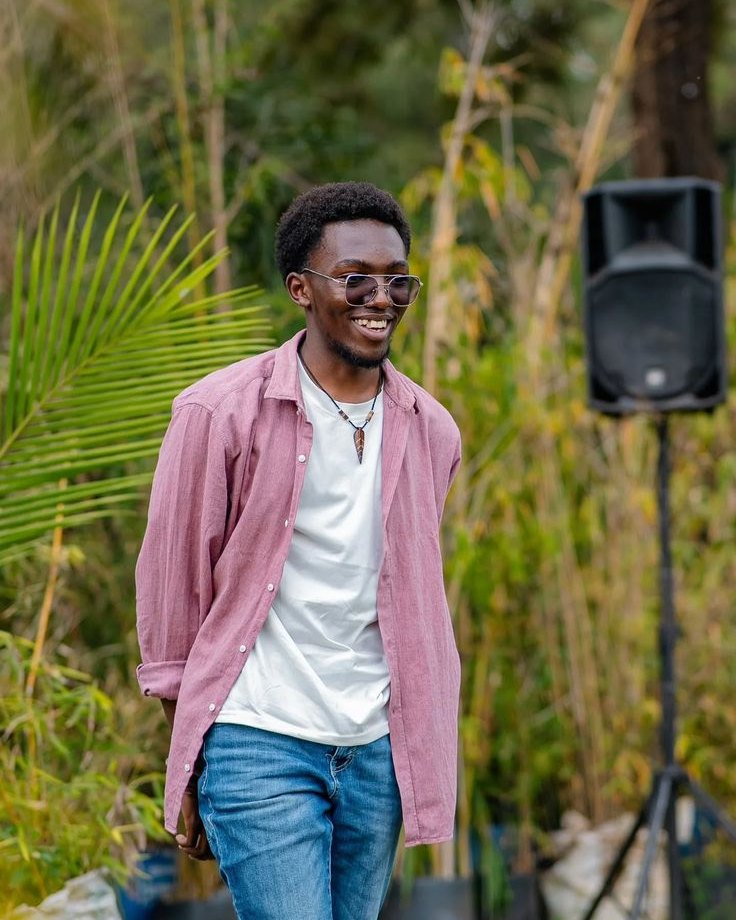
Written and signed by
Bezalel Nderitu
Founder and CEO, Lela Works Ltd
Comments
No comments yet. Be the first to share what this made you think of.